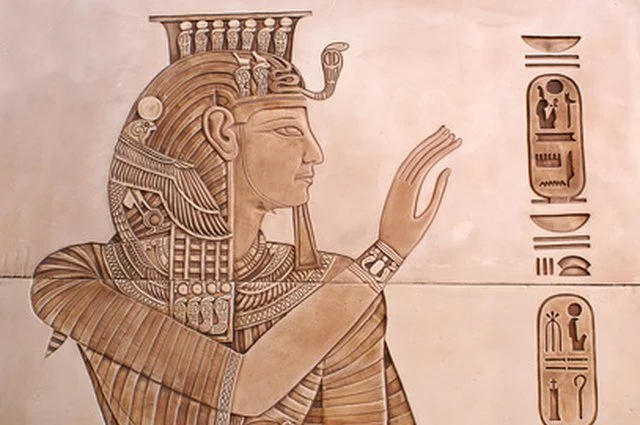
“1 Then the Lord said to Moses, “Go to Pharaoh, for I have hardened his heart and the hearts of his officials so that I may perform these miraculous signs of mine among them 2 that you may tell your children and grandchildren how I dealt harshly with the Egyptians and how I performed my signs among them, and that you may know that I am the Lord.”
3 So Moses and Aaron went to Pharaoh and said to him, “This is what the Lord, the God of the Hebrews, says: ‘How long will you refuse to humble yourself before me? Let my people go, so that they may worship me. 4 If you refuse to let them go, I will bring locusts into your country tomorrow. 5 They will cover the face of the ground so that it cannot be seen. They will devour what little you have left after the hail, including every tree that is growing in your fields. 6 They will fill your houses and those of all your officials and all the Egyptians— something neither your fathers nor your forefathers have ever seen from the day they settled in this land till now.’” Then Moses turned and left Pharaoh.
7 Pharaoh’s officials said to him, “How long will this man be a snare to us? Let the people go, so that they may worship the Lord their God. Do you not yet realize that Egypt is ruined?”
8 Then Moses and Aaron were brought back to Pharaoh. “Go, worship the Lord your God,” he said. “But just who will be going?” 9 Moses answered, “We will go with our young and old, with our sons and daughters, and with our flocks and herds, because we are to celebrate a festival to the Lord.” 10 Pharaoh said, “The Lord be with you—if I let you go, along with your women and children! Clearly you are bent on evil. 11 No! Have only the men go; and worship the Lord, since that’s what you have been asking for.” Then Moses and Aaron were driven out of Pharaoh’s presence.
12 And the Lord said to Moses, “Stretch out your hand over Egypt so that locusts will swarm over the land and devour everything growing in the fields, everything left by the hail.” 13 So Moses stretched out his staff over Egypt, and the Lord made an east wind blow across the land all that day and all that night. By morning the wind had brought the locusts; 14 they invaded all Egypt and settled down in every area of the country in great numbers. Never before had there been such a plague of locusts, nor will there ever be again. 15 They covered all the ground until it was black. They devoured all that was left after the hail—everything growing in the fields and the fruit on the trees. Nothing green remained on tree or plant in all the land of Egypt.
16 Pharaoh quickly summoned Moses and Aaron and said, “I have sinned against the Lord your God and against you. 17 Now forgive my sin once more and pray to the Lord your God to take this deadly plague away from me.” 18 Moses then left Pharaoh and prayed to the Lord. 19 And the Lord changed the wind to a very strong west wind, which caught up the locusts and carried them into the Red Sea. Not a locust was left anywhere in Egypt. 20 But the Lord hardened Pharaoh’s heart, and he would not let the Israelites go.
21 Then the Lord said to Moses, “Stretch out your hand toward the sky so that darkness will spread over Egypt—darkness that can be felt.” 22 So Moses stretched out his hand toward the sky, and total darkness covered all Egypt for three days. 23 No one could see anyone else or leave his place for three days. Yet all the Israelites had light in the places where they lived.
24 Then Pharaoh summoned Moses and said, “Go, worship the Lord. Even your women and children may go with you; only leave your flocks and herds behind.” 25 But Moses said, “You must allow us to have sacrifices and burnt offerings to present to the Lord our God. 26 Our livestock too must go with us; not a hoof is to be left behind. We have to use some of them in worshiping the Lord our God, and until we get there we will not know what we are to use to worship the Lord.”
27 But the Lord hardened Pharaoh’s heart, and he was not willing to let them go. 28 Pharaoh said to Moses, “Get out of my sight! Make sure you do not appear before me again! The day you see my face you will die.” 29 “Just as you say,” Moses replied, “I will never appear before you again.” ”
“How much more do you need to lose before you wake up?” That statement, or something like it, is usually part of an intervention. We humans can get stuck in downward spirals and sacrifice what matters for what doesn’t. Through tears sons, daughters, mothers, and fathers say and are told, “you’re losing everything.”
Addiction will take everything. It’s just a manifestation of sin and sin will take everything. God wants you to know that which is why there is a passage like today’s. It’s a warning for all of us. Sin will take absolutely everything from you if you let it. That’s the claim of this sermon: sin will take absolutely everything from you if you let it.
We will study this in two points. First: the locusts. Second: the darkness. We see the locusts in verses 1-20 and the darkness in verses 21-29.
We see the terrible consequences for sin first in our first point: the locusts. Pharaoh is the sin addict in this story. You are told about him so that you understand the way of the world. You are told about him so that you won’t be like him. As the New Testament reflects upon Pharaoh, it becomes clear that the purpose of that man’s life was to serve as a warning. That’s verse 2, “so that I may perform these miraculous signs of mine among them that you may tell your children and grandchildren how I dealt harshly with the Egyptians.” You don’t want your life to be a cautionary tale. It doesn’t need to be. Pharaoh can’t make changes anymore. He's been dead for centuries. You’re still alive. Make your changes.
By making such changes, we are doing exactly what the Lord intended with this Scripture. We are telling our children and grandchildren how the Lord dealt harshly with the Egyptians. We are learning, as verse 2 puts it, that He is the Lord. We’re not studying this passage because we have a worship service and need to study something. We’re studying this so that we and our children might know the Lord. Pharaoh didn’t want to know the Lord. The locusts will show the foolishness of that choice. We’re trying to keep ourselves from that same folly, and each of us is so very prone to fall into it.
Pharaoh was stuck in the folly of sin. The Lord told Moses and Aaron to tell him that; verse 3, say ‘to him, “This is what the Lord, the God of the Hebrews, says: ‘How long will you refuse to humble yourself before me?’”’ It seems that pride is at the root of Pharaoh’s destructive behavior. He will not humble himself before the Lord. He will not mind his place as we will consider tonight.
This is a picture of the world. We in 2025 live in an Egypt of our own making. There is no fear of the Lord operating in this culture. The thought that anything like these plagues could happen or that wrath is real is laughable in public discourse, but that’s the same folly as Pharaoh. “Let fear, then, teach us to repent,” as Calvin put it, “that we may not provoke His vengeance by proud contempt; let us learn that nothing is more terrible than to fall into His hands.” There is nothing worse than God’s wrath. The plagues are designed to teach us that. Are we learning?
These locusts were designed to teach Egypt; verse 4, “If you refuse to let them go, I will bring locusts into your country tomorrow. They will cover the face of the ground so that it cannot be seen. They will devour what little you have left after the hail, including every tree that is growing in your fields.” We’re told this would be the worst locust swarm in Egypt’s history. Last time, Moses said that the hailstorm would be the worst in Egypt’s history. At the time of the Exodus, Egypt had been around as a people for almost two thousand years. The Dust Bowl was about a hundred years ago. The Holocaust happened and the atomic bomb was dropped eighty years ago. These plagues were worse than anything that happened in two thousand years. This last cycle of plagues were potentially extinction level events for that civilization. The Lord was not playing games.
You see the Lord’s intensity in what Moses did after he warned about this coming plague; “Then Moses turned and left Pharaoh.” Moses said what he needed to say and turned his back on the king. Nothing short of Pharaoh chasing him down in repentance will do now.
Pharaoh’s advisors see the gravity of this situation; verse 7, “How long will this man be a snare to us? Let the people go, so that they may worship the Lord their God. Do you not yet realize that Egypt is ruined?” They were speaking the truth. The agriculture, the finances, and public health was decimated by hail, boils, and the death of livestock. Egypt was dying and now we see the government coming apart. “As the plagues multiply so do the fissures in the Egyptian camp,” as one scholar put it. You’re meant to see that the most powerful man in the world was increasingly alone and broken. That’s where opposing God will get you.
Now you might be confused here remembering that Pharaoh’s advisors had hard hearts. They do. Hard hearts have their moments of clarity but that doesn’t mean they get it. It’s a rather awful situation to have clarity and not see clearly at the same time. These men will reverse course and destroy Egypt. It’s tragic. Don’t get in the habit of disobeying the Lord. You might find that you can’t stop.
These advisors told Pharaoh that Moses was a snare. “How long will this man be a snare to us?” They felt trapped by Moses and the plagues. They were trapped in a snare because Pharaoh wouldn’t free the Hebrews. That’s exactly how God wanted them to feel because that was the situation His people were in—trapped by Pharaoh. God is remarkably good at making us humans take in what we dish out. We can take it as correction or we will receive worse as wrath.
Pharaoh listened to his advisors. He called Moses and Aaron back to try to avoid this plague, but when Moses and Aaron came, Pharaoh started to look for reasons not to let to them go. He asked Moses, “But just who will be going?” Just let them go! Pharaoh doesn’t want the wrath of the plagues, but he won’t stop sinning. That’s the way of the world.
The conversation didn’t go well and Pharaoh wound up, in the words of verse 11, driving Moses and Aaron from his presence. That’s the same word we are going to see when Pharaoh drives Israel out of Egypt after the angel of death has come. Pharaoh didn’t know what was coming when he drove those men away. We never do in our sin. Sin leaves you stuck in something you don’t understand.
Moses raises his staff—remember when this just seemed like a stick?—and the locusts came. Locusts swarms rather than normal amounts are hatched from ideal conditions. Rather than a few insects per thousand eggs surviving they survive by the hundreds of thousands. “They covered all the ground until it was black. They devoured all that was left after the hail—everything growing in the fields and the fruit on the trees,” as verse 15 put it.
The damage is becoming irreversible. You can dig along the Nile for drinking water. You can get rid of dead frogs. You’ve now got the probability of famine. Now could someone refresh my memory as to this beginning of this book? We saw a new Pharaoh rising to the throne who did not remember a certain man. Who didn’t this new Pharaoh remember? He didn’t remember Joseph—Joseph who saved Egypt from famine. The Lord sent Egypt Joseph to save them from agricultural disaster, the Egyptians enslaved that man’s family, and now we see the Lord sending agricultural disaster as a result. It’s exceedingly foolish to repay mercy with sin as the Egyptians did. Don’t spit on what God’s grace. The author Hebrews warned us against it. He spends five chapters talking about Jesus and then warns the church not to repay this mercy with sin. He said that people who do so are, “to their loss crucifying the Son of God all over again and subjecting him to public disgrace.” The Egyptians repaid God’s mercy to them in Joseph by sinning against his family. Don’t repay God’s mercy to you in Jesus by staying in your sin.
Now that the devastation was underway, Pharaoh said he was sorry. “I have sinned against the Lord your God and against you. Now forgive my sin once more and pray to the Lord your God to take this deadly plague away from me.” This might seem sincere because it’s so emphatic, but wouldn’t it need to be emphatic? Put yourself in Pharaoh’s shoes. How are you going to convince Moses to stop this plague? You’ve already said you were sorry and then you didn’t let the people go. Now you need to say that you’re really, really sorry. That’s not what’s needed, though. What’s needed is to let the people go, “but,” as verse 20 put it, “the Lord hardened Pharaoh’s heart, and he would not let the Israelites go.” We weave a very tangled web when we fall into sin. Pharaoh has spun a web and now he, the spider, is stuck in it. That’s the locusts. Now let’s see the darkness. That’s our second point: the darkness.
The Lord stopped the locusts. Pharaoh let the people go. Now since Pharaoh has, “wickedly abused God’s [mercy], he must… be suddenly overtake[n] by a new calamity,” as Calvin put it. Pharaoh needs another lesson.
In the previous plague, the Egyptians couldn’t see the land because it was black with locusts; “They covered all the ground until it was black.” Now everything would be black; verse 21, ‘Then the Lord said to Moses, “Stretch out your hand toward the sky so that darkness will spread over Egypt—darkness that can be felt.” So, Moses stretched out his hand toward the sky, and total darkness covered all Egypt for three days. No one could see anyone else or leave his place for three days.’
We don’t know what is like to live in a culture controlled by sunrise and sunset. The night was not safe for the ancients. It was deadly. You could stumble while walking and twist an ankle and there’s no casts or real surgery. Night was when the robbers came out, and you had no glass in your windows to protect your family. Children are often terrified of the dark and their reasons seem very wise to them. I hope you can see that the ancients were terrified of the dark for reasons that would seem very wise to you. Imagine the mass panic today if the sun was suddenly gone.
Moses describes this as “a darkness that could be felt.” This either means that it was so dark that people had to grope around the walls in their own homes to know where they were going—a darkness that required feeling—or that they could actually feel the darkness—the “claustrophobic palpability of absolute darkness” as one author put it. Either way, it would be terrifying. Imagine the response if the radar on your phone just showed darkness moving in potentially forever, and then your phone goes out, the electricity goes out, your windows shatter, and you can’t see your hand in front of your face and you don’t know if it will ever end.
That’s the point. You don’t know if it will ever end or if this the end. The plagues are about de-creation. On the first day, the Lord said, “let there be light.” The Lord put Egypt back into chaos. It’s a sign of what the Creator God could do to us with just another word. It ought to put us creatures in our place.
That’s part of why this darkness happened at Jesus’ crucifixion. “The rebels who were crucified with him also heaped insults on him. From noon until three in the afternoon darkness came over all the land.” The Father had His plan with the cross but that doesn’t mean He was pleased with humanity for crucifying His Son. You can see His wrath at cross and not just on Jesus. That absolute darkness is a sign of it.
This absolute darkness is yet another blow to the Egyptian gods. This is a glory war. The Lord has been embarrassing the Egyptian gods. Now he turns the sun against them. If you could bring up the slide.
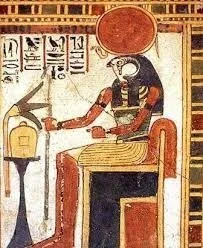
Re is the Egyptian god of the sun. Pharaoh was the human representative of this god. He was called the son of Re. The people would call Pharaoh, “my sun,” with a “u”. “You are my sunshine.” The message here is that to this God of these slaves, this sun is just a lightbulb that He turns on and off as He sees fit. That’s the God Pharaoh refused listen to. That’s the God the world still refuses to listen to. He is in charge of everything and we treat Him as if He’s nothing. The world is Pharaoh. Don’t fall in in with it.
This is the last plague of the last cycle. What we see next will be something different altogether. The cycles are over, but recognize that the Lord could have kept them going. Pharaoh thought it couldn’t get worse after the gnats when his magicians couldn’t stop the plague at the end of the first cycle, but it did. Pharaoh thought it couldn’t get worse after the economy was devastated with the livestock plague at the end of the second cycle, but it did. It can always get worse. It will get worse in the tenth plague, and then there’s always hell. Hell is the uninterrupted, eternal, irreversible cycle. Anyone in hell would envy what Pharaoh has been going through. You don’t want to find yourself envying what you see in these plagues. Don’t enter eternity with a hard heart. Don’t enter the never-ending cycle. Accept the grace of God.
Pharaoh called Moses and Aaron in to end this darkness and yet again it seems as if he didn’t really want to let the people go. He told them they couldn’t take their animals. Now if you find it unbelievable that a man in Pharaoh’s situation would continue to try to control the situation, think about interventions with people stuck in self-destructive behavior. They don’t make any more sense.
Pharaoh is senseless. He is foolish. In other words, he has no fear of the Lord. You see that by the way he tells the Lord’s servant off at the end of this plague; “Get out of my sight! Make sure you do not appear before me again! The day you see my face you will die.” Pharaoh still thinks he’s in charge. He thinks he’s judging Moses. That’s not the case. “Just as you say,” Moses replied, “I will never appear before you again.”
By saying, “I’ll never appear before you again,” Moses was telling Pharaoh that his chance for repentance is over. The Lord, as we’ve seen, has made Moses God to Pharaoh and Moses was now turning his back on Pharaoh forever. That’s where a hardened heart will lead. There is a point of no return.
Pharaoh has passed it, but in his pride does not see. Pharaoh is focused on his own glory. From his lofty perch, he tells Moses, “The day you see my face you will die.” That’s not glory. This is glory. “Show me your glory,” Moses asked the Lord on Sinai. “I will cause all my goodness to pass in front of you,” said the Lord, “and I will proclaim my name, the Lord, in your presence. I will have mercy on whom I will have mercy, and I will have compassion on whom I will have compassion. But,” He said, “you cannot see my face, for no one may see me and live.” That’s glory. There is a face you cannot see and live, but int’s not Pharaoh’s. Don’t fear the world. Fear the Lord.
Pharaoh had threatened Moses with death. “The day you see my face you will die.” Moses has had a Pharaoh threated him with death before. Moses took off for the wilderness. He wound up at Sinai. Moses is about to do it again, and this time he’s taking everyone with him and Pharaoh will have everything taken from him. Sin will take everything from you. It will do it to you if you let it. “Be killing sin,” John Owen said, “or sin will be killing you.” Amen.