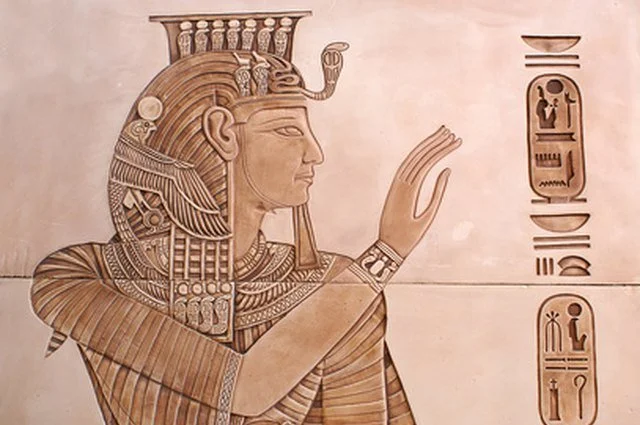
“1 Now the Lord had said to Moses, “I will bring one more plague on Pharaoh and on Egypt. After that, he will let you go from here, and when he does, he will drive you out completely. 2 Tell the people that men and women alike are to ask their neighbors for articles of silver and gold.” 3 (The Lord made the Egyptians favorably disposed toward the people, and Moses himself was highly regarded in Egypt by Pharaoh’s officials and by the people.)
4 So Moses said, “This is what the Lord says: ‘About midnight I will go throughout Egypt. 5 Every firstborn son in Egypt will die, from the firstborn son of Pharaoh, who sits on the throne, to the firstborn son of the slave girl, who is at her hand mill, and all the firstborn of the cattle as well. 6 There will be loud wailing throughout Egypt—worse than there has ever been or ever will be again. 7 But among the Israelites not a dog will bark at any man or animal.’ Then you will know that the Lord makes a distinction between Egypt and Israel. 8 All these officials of yours will come to me, bowing down before me and saying, ‘Go, you and all the people who follow you!’ After that I will leave.” Then Moses, hot with anger, left Pharaoh.
9 The Lord had said to Moses, “Pharaoh will refuse to listen to you—so that my wonders may be multiplied in Egypt.” 10 Moses and Aaron performed all these wonders before Pharaoh, but the Lord hardened Pharaoh’s heart, and he would not let the Israelites go out of his country. ”
You might be familiar with Rube Goldberg machines. They are elaborate contraptions made up of chain reactions. Each step rolls out in unpredictable perfection leading to the complex completion of a seemingly simple task. If you could bring up our first slide.
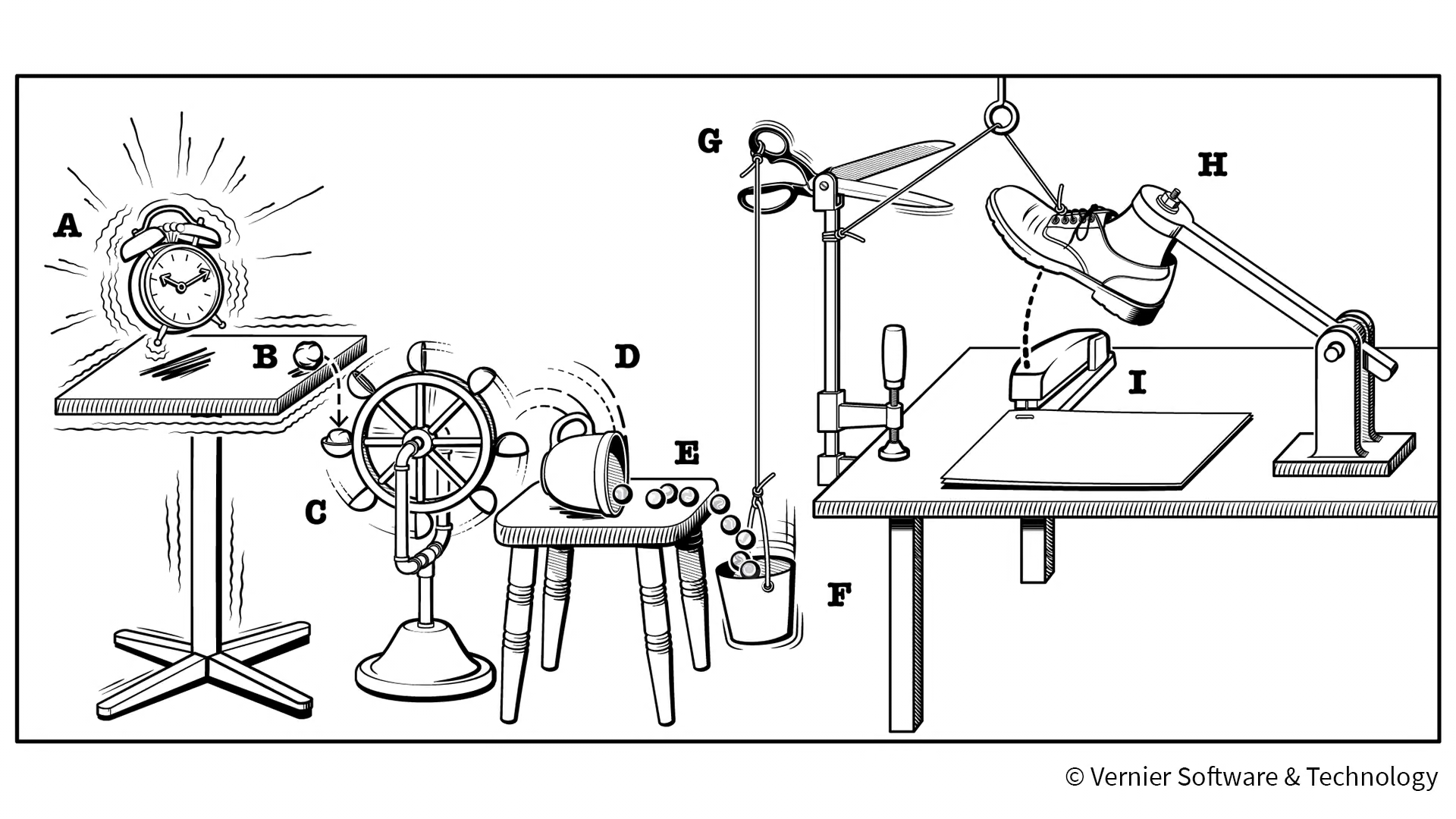
Here the alarm clock goes off vibrating the table to the point that the rock falls into the wheel, which turns tipping over the cup and spilling the balls into to the bucket the downward motion of which pulls the scissors cutting the string so the boot stamps the stapler stapling two pieces of paper together. Stapling the two pieces of paper is a simple task but each step along the way, while seemingly meaningless in itself, was absolutely necessary to achieve it.
That’s what God ways sometimes seem like in this life. We are the midst of the process and can’t see how the vibrating of a clock or the spinning of a wheel is necessary. Long stories like the Exodus give us an opportunity to watch the chain reaction progress. We then see that the Lord’s ways roll out in unpredictable perfection and each part is necessary and that’s the claim of this sermon: the Lord’s ways roll out in unpredictable perfection and each part is necessary.
We will study this in three points. First: prepping to leave. Second: the coming plague. Third: don’t miss the point. We see God’s people prepping to leave in verses 1-3. We hear about the coming plague in verses 4-8. Moses reminds us readers of the point in verses 9-10.
We see progression in our first point: prepping to leave. What’s it going to take for Pharaoh to let the people go? We’ve already gone through nine plagues. It will take ten; verse 1, ‘Now the Lord had said to Moses, “I will bring one more plague on Pharaoh and on Egypt. After that, he will let you go from here, and when he does, he will drive you out completely.”’
It was always going to take these ten. God has no contingency plans—only the only way it can go. That’s sovereignty through providence. Plague had triggered response and response had triggered plague. We’ve been watching it for weeks now—the Lord’s plan unfurling in perfection. There’s comfort in that if you trust Him because it means there is a purpose for the step you are in. There is a warning in that if, like Pharaoh, you oppose Him.
Pharaoh was still in the room with Moses. Moses has yet to leave after the plague of darkness. These words we are studying were given to Moses beforehand. You see that in verse 1’s, “the Lord had said to Moses.” Moses knew that one more plague was coming when he walked in during the darkness. Pharaoh’s hard heart would trigger the tenth plague.
The Lord had told Moses to get the people ready to leave; verse 2, “Tell the people that men and women alike are to ask their neighbors for articles of silver and gold.” Remember Moses used to quite afraid to speak to the people? Remember the fuss he made at the burning bush? You sense no hesitancy now, and this is a big ask—“go to your oppressors and ask them to give you their treasures.” These plagues have taught Moses the fear of the Lord and so he the Hebrews and the Egyptians less. The Lord was getting Moses ready for his upcoming responsibilities in the wilderness—when not Pharaoh but the people would be stubborn. Moses didn’t know that at the time. We rarely know what God is doing in and for us at the time He’s doing it.
The Lord has greased the skids for this request to the Egyptians by way of the plagues. Wouldn’t you be willing to give up your gold and silver to put an end to hail, locusts, darkness, and whatever’s next?
The Lord was bringing His people out of Egypt, and He was doing it in style. He was providing the gold and silver they would need once they got to the wilderness. They didn’t know that, but they didn’t need to. They were called to trust and obey and leave the intricate planning to Him. That’s how it goes for God’s people. We’re not in a different situation.
The Lord used the plagues to make the Egyptians favorably disposed to the Hebrews. He also used the plagues to make the Egyptians favorably disposed to Moses. We are told that Moses was held in high regard by the Egyptians and the officials. They might not have liked Moses, but they certainly respected him. They knew that he spoke for this God of the Hebrews. They were willing to yield to his cause because they saw that to oppose him was to oppose God.
They were beginning to see Pharaoh and his opposition to Moses sensibly. They saw Pharaoh’s position as, in the words of one author, “a fanatical, destructive, hopeless stance that was doing nothing but harm.” The rightness of the Lord’s position and the foolishness of Pharaoh’s position were becoming obvious. That will be true again regarding the destructive nature of this dark world. We’re in the midst of that bucket falling triggering the scissors for the next step of God’s justice. We’re all living in the unrolling of God’s plan.
Pharaoh triggered another plague. That’s our second point: the coming plague. Moses was with Pharaoh’s at the end of the plague of darkness. Pharaoh said that Moses needed to stop showing up and announcing these plagues, and so Moses announces this next plague before he leaves. Moses announced the great plague—the one that will trigger the end. The cycles have ended. That’s not good news. If you are a gamer, this is where you cue the boss music. Pharaoh thought it couldn’t get worse. This great plague will be much worse.
Sin always brings something worse. Imagine a single lady who’s lonely. If you want to get married and it’s not happening, that can be quite frustrating. This young lady doesn’t think it can get worse. She thinks that becoming involved with a man from her workplace will be preferrable to her loneliness, and she thinks that even though he’s married. There will be momentary relief from loneliness, but it will only be momentary. The fallout with his wife, those children, and her own parents will last much longer. It can always get worse. Just sin.
We all find that out by experience and unchecked the experience leads to death. It led Egypt to the plague of death. Pharaoh called the plague of locusts, “this deadly plague.” This is real death.
This plague of death was to begin at midnight. The ancients didn’t have clocks like us. Midnight wasn’t 12:00 and the beginning of a new day. Midnight was the darkest moment of the night. Things were about to go bump in the night.
The Lord was coming; ‘This is what the Lord says: “About midnight I will go throughout Egypt…” Who to this point has been going throughout Egypt? Frogs have been hopping in Egypt. Biting flies have been buzzing in Egypt. Hail has been failing on Egypt. Now the Lord was coming. “About midnight I will go throughout Egypt…” That’s why this is the last plague. It is the Lord Himself.
The coming of the Lord wasn’t good news for Pharaoh. It’s never good news anyone happy in sin. The last book of the Old Testament—Malachi—asked it this way, “who can endure the day of His coming? Who can stand when He appears?”
That’s what it means for the Lord Himself to come rather than send a messenger, and that’s what makes the first coming of Jesus so surprising. He comes as a baby. He becomes like you to save you. Yet another offer of mercy comes before judgment. Refusing that mercy is unwise. It’s unwise like refusing to let the people go after nine plagues. You don’t want to meet the Lord like that.
This last plague is terrible. It’s the death of the firstborn, “Every firstborn son in Egypt will die, from the firstborn son of Pharaoh, who sits on the throne, to the firstborn son of the slave girl, who is at her hand mill, and all the firstborn of the cattle as well.” In that culture, the firstborn was the promise of life. He carried on the family. He received a double share of the inheritance in order take care of his mother after his father died. He was the sign that life would continue. This plague isn’t just about the death of a child as terrible as that is. It is about the death of hope.
The firstborn likely died in their sleep. It was the parents who wailed in, “There will be loud wailing throughout Egypt—worse than there has ever been or ever will be again.” It was Pharaoh who wailed. A man can be a tyrant to others and a teddy bear to his own family. When Stalin’s daughter was little, he called her his “Little Sparrow.” We humans have a perverse ability to limit our love—delight in our children while consigning other children to death. We had a perverse ability to not do unto others as we would have them do unto us.
This was all happening because Pharaoh would not do unto others as he would have them do unto him. Moses has used this word for wail, “there will be loud wailing throughout Egypt,” already; “The Lord said, “I have indeed seen the misery of my people in Egypt. I have heard them [wailing] because of their slave drivers… the [wail] of the Israelites has reached me.” The firstborn son has shown up before too; ‘Say to Pharaoh, “This is what the Lord says: Israel is my firstborn son, and I told you, ‘Let my son go, so he may worship me,’ but you refused to let him go; so, I will kill your firstborn son.’”’
The Lord said that before any of the plagues began. He warned him nine times and Pharoah kept wanting to tangle. It’s like a fight in a movie from years ago. This guy kept threatening the main character. The main character warned him about what’s going to happen if he kept it up, but the guy laughed it off. Before the fight, the main character says, “remember, you wanted this.” That’s the Lord to Pharaoh and the world in their sin; “Remember, you wanted this.”
The Lord had told Pharoah, the leader of these people including these firstborns, where this would lead before the plagues began. Pharaoh ignored every warning. He would now lose everything. Pharaoh’s officials would come bowing to Moses and begging him to do what Pharaoh wouldn’t allow. At the beginning, Pharaoh thought the Lord was powerless. “Who is the Lord? Why should I listen to this god of slaves?” Here at the beginning of the end, we see that it’s Pharaoh who has no power. Moses will leave not when Pharaoh says he can, but when the Lord says—not a moment after and not a moment before. Pharaoh will be the last one to figure that out.
The Lord Himself suffers this same firstborn curse on behalf of this dark world. “God loved the world in this way: He gave His one and only Son that whoever believes in him might not perish but have eternal life.” The Lord knows what it’s like to have a firstborn die because of someone else’s stubborn sin—our stubborn sin. If you are stuck with these firstborns wondering how bad things could happen to good people, remember that Jesus is the only clear-cut example of bad things happening to a good person and he offered himself. We easily miss the point in Scripture and in life. We see that in our last point: don’t miss the point.
We’re about to hear some repetition. The Bible, though, is never needlessly repetitive. When the Lord repeats himself, He does it for the same reason a mother repeats herself. She knows the child has yet to understand. The mother told her son to clean the windows. He does so and she tells him again. If he says, “I heard you the first time,” he hasn’t grasped what she’s saying. She’s saying, “you’re not cleaning the windows correctly.”
Let’s not lightly dismiss the repetition of our Lord; verse 9, ‘The Lord had said to Moses, “Pharaoh will refuse to listen to you—so that my wonders may be multiplied in Egypt.” Moses and Aaron performed all these wonders before Pharaoh, but the Lord hardened Pharaoh’s heart, and he would not let the Israelites go out of his country.”’
This is a summary of everything we’ve seen with the plagues. We don’t know how long they took. Considering the information about crops we find in the hail plague and the date of the Passover, plagues seven through ten probably took about eight weeks. We don’t know how long plagues one through six took or how long of a gap there was between those plagues.
One of the lessons of all the plagues, though, and in particular of this summary is that lessons need to be repeated because we are remarkably slow to learn. The repetition in these plagues is the point. We humans think we know something to death when we’ve only just begun to get it. I need to be reminded of a parenting truth I’ve heard dozens times. I say, “I know, I know,” even though I’m only applying it at five percent effectiveness with three percent frequency.
That’s all of us with spiritual matters. We say, “I know. I know,” even though we’re only applying it at five percent effectiveness with three percent frequency. Spiritually speaking, we often want a new lesson not because we’re mastering the one we’re on, but because hearing new one after new one shields us from having to master any of them. “Be ever hearing but never understanding, ever seeing but never perceiving.”
The Lord is training His people. You see that here in the Exodus. You see that with Jesus and his disciples. How trainable are you? When the Lord repeats Himself, what do you do with that? When, like Pharaoh, you see the same consequences for the same sin, what do you do with that? Do you recognize that you might be only beginning to learn?
Take distinction for example. The Lord has made distinctions between Egypt and Goshen for quite a while now. With this plague, he makes clear that while the angel of death will go through Egypt, not a dog will bark in Goshen. “Then you will know that the Lord makes a distinction between Egypt and Israel.” You don’t think they knew there was a distinction before that? They didn’t get that already? Apparently not, according to the Lord. That’s true with all of us in more ways than we know.
The Lord’s words and ways are never needless. We only judge ourselves when we judge them. His ways are perfection. That’s why Jesus said, “truly I tell you, until heaven and earth disappear, not the smallest letter, not the least stroke of a pen, will by any means disappear from the law until everything is accomplished.”
The smallest latter, the least stroke of the pen, the wailing of the Israelites, Israel as the firstborn—these might seem needless, but they’re just as necessary to God’s plan as that cup spilling those balls into that bucket. It’s unfolding in unpredictable perfection and it is happening all the time. The question is whether you get the point. The question is whether you trust or oppose. Amen.