“16 “Go, assemble the elders of Israel and say to them, ‘The LORD, the God of your fathers—the God of Abraham, Isaac and Jacob—appeared to me and said: I have watched over you and have seen what has been done to you in Egypt. 17 And I have promised to bring you up out of your misery in Egypt into the land of the Canaanites, Hittites, Amorites, Perizzites, Hivites and Jebusites—a land flowing with milk and honey.’
18 “The elders of Israel will listen to you. Then you and the elders are to go to the king of Egypt and say to him, ‘The LORD, the God of the Hebrews, has met with us. Let us take a three-day journey into the desert to offer sacrifices to the LORD our God.’ 19 But I know that the king of Egypt will not let you go unless a mighty hand compels him. 20 So I will stretch out my hand and strike the Egyptians with all the wonders that I will perform among them. After that, he will let you go.
21 “And I will make the Egyptians favorably disposed toward this people, so that when you leave you will not go empty-handed. 22 Every woman is to ask her neighbor and any woman living in her house for articles of silver and gold and for clothing, which you will put on your sons and daughters. And so you will plunder the Egyptians.”
4:1 Moses answered, “What if they do not believe me or listen to me and say, ‘The Lord did not appear to you’?”
2 Then the LORD said to him, “What is that in your hand?” “A staff,” he replied. 3 The LORD said, “Throw it on the ground.” Moses threw it on the ground and it became a snake, and he ran from it. 4 Then the LORD said to him, “Reach out your hand and take it by the tail.” So Moses reached out and took hold of the snake and it turned back into a staff in his hand. 5 “This,” said the LORD, “is so that they may believe that the LORD, the God of their fathers—the God of Abraham, the God of Isaac and the God of Jacob—has appeared to you.”
6 Then the LORD said, “Put your hand inside your cloak.” So Moses put his hand into his cloak, and when he took it out, it was leprous, like snow.
7 “Now put it back into your cloak,” he said. So Moses put his hand back into his cloak, and when he took it out, it was restored, like the rest of his flesh.
8 Then the LORD said, “If they do not believe you or pay attention to the first miraculous sign, they may believe the second. 9 But if they do not believe these two signs or listen to you, take some water from the Nile and pour it on the dry ground. The water you take from the river will become blood on the ground.”
10 Moses said to the LORD, “O Lord, I have never been eloquent, neither in the past nor since you have spoken to your servant. I am slow of speech and tongue.”
11 The LORD said to him, “Who gave man his mouth? Who makes him deaf or mute? Who gives him sight or makes him blind? Is it not I, the LORD? 12 Now go; I will help you speak and will teach you what to say.”
13 But Moses said, “O Lord, please send someone else to do it.” 14 Then the LORD’s anger burned against Moses and he said, “What about your brother, Aaron the Levite? I know he can speak well. He is already on his way to meet you, and his heart will be glad when he sees you. 15 You shall speak to him and put words in his mouth; I will help both of you speak and will teach you what to do. 16 He will speak to the people for you, and it will be as if he were your mouth and as if you were God to him. 17 But take this staff in your hand so you can perform miraculous signs with it.””
The mind has a remarkable ability to focus. Some of us struggle with bringing it into focus and others of us struggle with breaking it from focus, but the fact remains it is a true gift. It, like the rest of us, has fallen into sin, though. We now forget the continual gifts God gives and focus on our lack. We can be all but blind as to what is going right but an offer razor sharp perceptions as to what’s going wrong. We almost never focus on God and almost continually focus on ourselves. We focus our minds but rarely in an ultimately helpful manner.
That’s the struggle we see in Moses this morning. He is focusing on his fears, his regrets, and himself and so he responds poorly to the Lord. This passage teaches that for Moses and us responding rightly to the Lord requires more focus on Him than on ourselves; that’s the claim of this sermon: responding rightly to the Lord requires more focus on Him than on ourselves.
We will study this in four points. First: the promises of God. Second: what if they don’t believe me? Third: I’m not eloquent. Fourth: please send someone else. First, in verses 16-22 of chapter 3, we see the promises of God. Second, in verses 1-9 of chapter 4, Moses asks God, “What if they don’t believe?” In verses 10-12, Moses tells God that he’s not eloquent enough for the task. In verses 13-17, we see Moses asking God to send someone else.
We see the proper focus in our first point: the promises of God. The Lord had called Moses way outside of his comfort zone. He called Moses to bring His people up out of Egypt. He did so because He cared; verse 16, ‘Go, assemble the elders of Israel and say to them, “The Lord, the God of your fathers—the God of Abraham, Isaac and Jacob—appeared to me and said: I have watched over you and have seen what has been done to you in Egypt. And I have promised to bring you up out of your misery.”’
The Lord wasn’t calling Moses for the sake of watching him squirm. He was calling Moses because He cared about His people and about Moses. He was calling Moses to do something Moses cared about. Moses was only living on the run because he once cared enough to do something about his people’s suffering. The Lord cared too. He cared more than Moses. In fact, Moses only cared in the first place because God had cared first. That’s how it goes. We don’t bend a resistant, aloof God into caring like we do. He bends resistant, aloof us into caring a bit more as He does.
Two weeks ago we saw that Moses was afraid that the people wouldn’t listen to him. After all, he had tried to help them before and they wouldn’t respond. The Lord understood that fear and so, in verse 18, promised that, “The elders of Israel will listen to you.” As a side note, there is a proper plurality of leadership here; it is united around the Lord’s will as you see in verse 18, ‘Then you and the elders are to go to the king of Egypt and say to him, “The Lord, the God of the Hebrews, has met with us. Let us take a three-day journey into the desert to offer sacrifices to the Lord our God.”’ This unity wouldn’t be built around Moses’ flesh the way his first plan went. It wouldn’t be built around consensus among Hebrews as to a plan. It would be built around the Lord’s will. Obedience to Lord’s call is the unifying factor in faith leadership.
Fascinatingly, Moses was told that the leadership’s request to Pharaoh would be denied; verse 19, “I know that the king of Egypt will not let you go unless a mighty hand compels him.” The Lord told Moses about the impending denial beforehand so Moses would not grow discouraged or angry by unmet expectations. The Lord regularly manages expectations this way throughout Scripture and we would be wise to learn that lesson in this life full of troubles. He does so because we have this strange but understandable notion that if someone just took the right action, everything would go right. If we just raise our children right, everything will go well for them. If only that man heard the truth, he would change. That’s not how it usually goes, though. Here’s the way it does go—we trust and obey God and He does with that whatever He wants with it. There is no simple cause and effect in spirituality. It is about the work and will of God. Accepting that is part of our work and will be part of Moses’ and the Hebrews’ work from here on out.
In the end, the work and will of God superior will prove superior to our expectations. You see a hint of that already in verse 21, “I will make the Egyptians favorably disposed toward this people, so that when you leave you will not go empty-handed.” Pharaoh immediately giving Moses and the elders their request would not have led to them plundering the Egyptians. Only the Lord striking Egypt as they struck His people would. The Exodus will go the way Moses or the Hebrews anticipated, but it will end much better than they anticipated. That’s the way of cross and resurrection. It’s not merely a one-time event; rather, it typifies life with God.
The Lord wanted Moses and the elders to depend on His promises rather than fall prey to their fears and expectations. He wants us to do the same. Moses struggled with this and was honest about it and so wrote this struggle down. Today’s passage will not make Moses look good, but we can be impressive or we can be known. Moses wrote this down because we are quite like him. We see him honest about his continued fear in our second point: what if they don’t believe me?
This question of whether the people would listen obviously haunted Moses. The Lord just told him that they would listen and now Moses will want more assurances. He couldn’t seem to get beyond the time his people rejected him. That’s how it goes for us too, though. When something seems hysterical, it is historical; verse 1 of chapter 4, ‘Moses answered, “What if they do not believe me or listen to me and say, “The Lord did not appear to you”?’
Moses was more focused on himself than on the Lord. That’s why he keeps throwing up obstacles. As Calvin put it, “neither is there any believer who is not often drawn into such harassing discussion whenever his mind is darkened by the perception of obstacles.” We, like Moses, do hear the Lord, but our fears simply seem more real to us than Him.
The Lord had given Moses more than enough assurances to deal with this particular fear, but He doesn’t point Moses’ disbelief out yet. Instead, He gave more promises. The Lord is slower to irritation than we are. He wanted to encourage. He gave Moses signs.
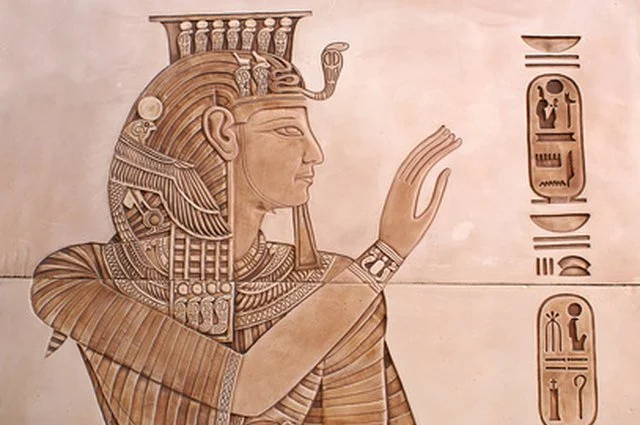
The first sign had to do with the staff in Moses’ hand. When Moses threw it on the ground, it would become a snake. When Moses grabbed that slithering snake by the tail, it would become a staff again. The snake was a sign of Egyptian royal authority. Please bring up the first picture. Here you have a Pharaoh with a snake on his headdress.
Please bring up the second.
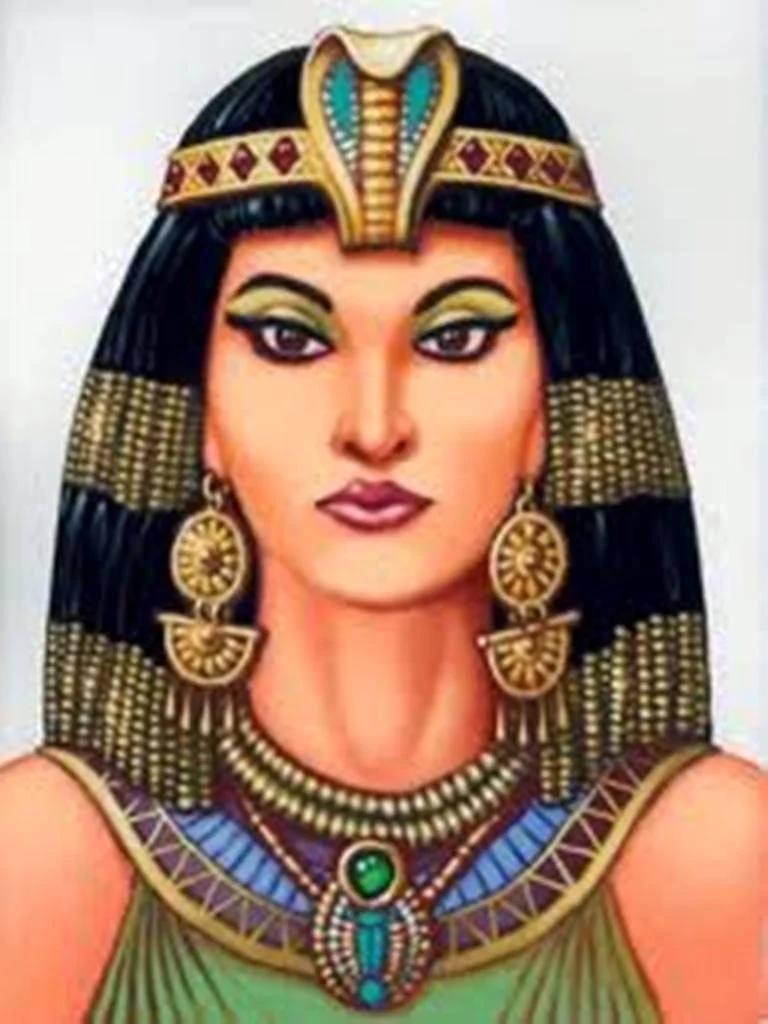
Here you have an artist’s rendering of Cleopatra with a snake on her headdress. The snake was a symbol of Egyptian power; that’s why it was on their crowns. The message of this sign is that Moses could grab Egyptian power by the tail and turn into something lifeless. This would be like a symbol of a beaten bear today in the Ukraine—a beaten, Russian bear. This is God’s glory war against Egypt.
The second sign had to do with disease. Moses would put his hand in his cloak and take it out with an uncurable disease. He would do it again and his hand would be restored. Moses’ God had power to afflict and to heal. We will see this throughout the plagues. The Lord will afflict the Egyptians—the leprous—and make a distinction between them and his people—the healed. What could the Egyptian gods do by contrast? Nothing. The Lord is showing His glory by way of contrast. He still is the only one who can do what’s needed and He is superior whatever it is you choose to contrast against Him. He’s teaching us to do that here.
The third sign was ominous. Moses would take water from the Nile and pour it onto the Egyptian soil as blood. The Nile was considered a source of life in Egypt. Please bring up that satellite image and you can see why.
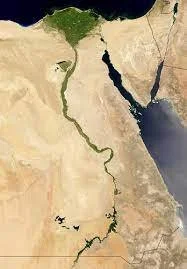
It is only green by the Nile—the source of life. They considered the Nile sacred—an expression of their gods. The God of Moses could bloody those gods at His leisure. There might be something else ominous in this Nile water turning to blood. How did Pharaoh tell the Egyptians to kill those Hebrew baby boys? Throwing them into the Nile. The Nile water became blood. The Lord has not forgotten. He will avenge.
These signs were designed to give courage to Moses and the Hebrews and strike fear into the heart of Egypt. The Lord didn’t decimate the superpower of that day with human strength. Moses simply used a shepherd’s staff. Calvin is right, “this… was the object of the miracle, that there was no occasion for mighty armies, since Pharaoh would tremble at the sight of the simple rod.” That’s what we will see. By the time the Lord is done with him, the most powerful man alive will be terrified of a stick.
We are all afraid of someone or something. It’s worth considering who or what, but in the end it isn’t as consequential as we think because the message of this book is that the world doesn’t compare with the Lord. As Jesus put it, “Do not be afraid of those who kill the body but cannot kill the soul. Rather, be afraid of the One who can destroy both soul and body in hell.” Fearing God more helps us fear others less.
The Lord was answering Moses’ fears one by one. This continues with our third point: I’m not eloquent. Moses continued to have concerns about his adequacy to the task; verse 10, ‘Moses said to the Lord, “O Lord, I have never been eloquent, neither in the past nor since You have spoken to your servant. I am slow of speech and tongue.”’ It seems highly unlikely to me that, as some argue, Moses had a speech impediment. Nothing in the rest of Exodus or the entirety of Leviticus, Numbers, or Deuteronomy portrays this man as unable to speak intelligibly—quite the opposite.
Moses’ concerns rather were starting to reveal themselves as mere excuses. There is a sort of false humility that refuses to submit to God by way of self-depreciation. It’s our way of saving face while still disobeying. As Calvin put it, “we must carefully distinguish between the timidity which delays our progress and the bold refusal which is allied to contempt.”
In his shame and to his shame Moses tries to offer shame in the place of obedience. He says, “I have never been eloquent, neither in the past nor since you have spoken to Your servant.” It’s not that different from a child who had been told to eat her vegetables. She doesn’t want to and so she snuggles up to her mom and tells her how much she loves her hoping that that snuggle will make up for not eating the vegetables. That mom won’t be fooled. She’ll say, “I love you too. Eat your vegetables.” God isn’t fooled either. That’s what 1 Samuel 15:22 is all about, “Has the Lord as great delight in burnt offerings and sacrifices, as in obeying the voice of the Lord? Behold, to obey is better than sacrifice, and to listen than the fat of rams.”
You can’t offer God something else, even shame about yourself, in place of obedience. He isn’t going to take my coming to worship this morning as substitution for any other obedience. “Adam doesn’t want to trust me with his future but He did come to worship. I guess it evens out.” It doesn’t even out.
The Lord was not pleased with Moses’ response; verse 11, ‘The Lord said to him, “Who gave man his mouth? Who makes him deaf or mute? Who gives him sight or makes him blind? Is it not I, the Lord?” The Lord explained to Moses what these excuses looked like from His perspective. “So, you aren’t eloquent enough to do what I tell you. Okay, one question—who made your mouth?” Moses thought he was excusing himself because of his inadequacies. God made clear that Moses was calling God inadequate. Any refusal to obey God is a condemnation of God. We are just seeing ourselves revealed here. In our sin we give ourselves away. We do so in marriage. “God, I know I’m supposed to honor my husband but he isn’t honorable in these ways.” The Lord knows. The Lord gave him to you so honor everything you can. “Who gave man his mouth? Who makes him deaf or mute?” “Who gave you this husband?” “Who gave you this job?” We are always dealing with the Lord.
It’s to our great blessing that He is remarkable gracious; you see that in verse 11, “Now go; I will help you speak and will teach you what to say.” The Lord doesn’t abandon Moses. He remains in relationship because that’s the only place you can work matters out. That’s the deadly danger of cutting others out of your life. The Lord has more causes than any of us to do so but He is much slower to play the hell card than we are and much quicker to work matters out. That’s His glory and something for each of us to learn. It’s much more about relationship than it is about being right.
That’s good because Moses is going to test this relationship in our last point: please send someone else. This sort of honesty is rare and it’s extraordinary that Moses includes it in Scripture; verse 13, ‘But Moses said, “O Lord, please send someone else to do it.” The Lord’s patience is beyond comprehension in verse 14, “What about your brother, Aaron the Levite? I know he can speak well.”
There is great grace and correction in this. Moses wants someone to go for him. The Lord gives him Aaron to go with him. Aaron, as we will see, will speak for Moses, but Moses won’t always appreciate that. Aaron can speak well. He can speak so well that when Moses comes back to Sinai, Aaron will convince the people to worship an idol even though they had just heard the Lord tell them, “You shall not make for yourself a carved image… You shall not bow down to them.” We need to be very careful regarding what we think we need from God because we might get more and less than we think.
What’s fascinating will this provision is that Aaron was already on the way. You see that in verse 14, “What about your brother, Aaron the Levite? I know he can speak well. He is already on his way to meet you, and his heart will be glad when he sees you.” The Lord sent Aaron even before Moses asked Him to send someone else. The Lord knows what He will provide us even before we recognize our need for it. He has never been a step behind any of us. It simply seems that way to us because we are finite and fallen. We need to keep learning to trust.
Trusting involves going. That’s what’s going on with the end of this passage, “But take this staff in your hand so you can perform miraculous signs with it.” This is the Lord telling Moses to get going. It’s like telling your child who is dawdling when it’s time to leave for school, “grab your backpack.” The time for concerns, excuses, and refusal is over. It’s time to move on. It’s time get going. You cannot just be a hearer of the word, Moses. You must be a doer, and so it is for us. We often long to linger in what’s not obedience.
Moses needs to stop thinking about what went wrong when he was in Egypt before and go. He needs to stop thinking about his own insufficiency and go. He needs to stop thinking about himself and start focusing on God. There is perhaps obedience before you and you need to eliminate whatever lies between you and it and go.
You are going to put your focus somewhere—on the Lord or on you. You can’t do it for Moses, and he can’t do it for you. We can only do it for ourselves and the message here is that we must. We must focus on Him. It is the only way forward. Amen.