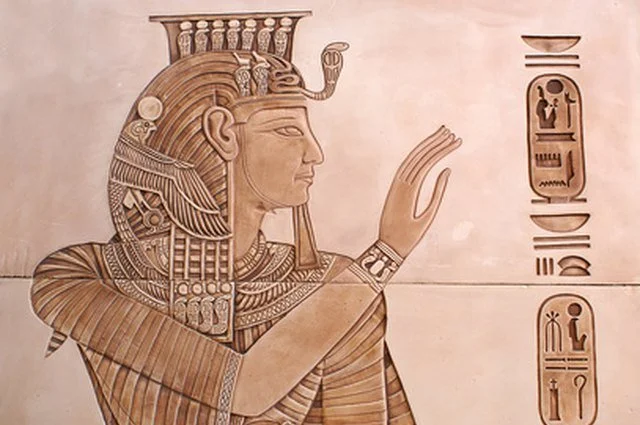
“17 When Pharaoh let the people go, God did not lead them on the road through the Philistine country, though that was shorter. For God said, “If they face war, they might change their minds and return to Egypt.” 18 So God led the people around by the desert road toward the Red Sea. The Israelites went up out of Egypt armed for battle.
19 Moses took the bones of Joseph with him because Joseph had made the sons of Israel swear an oath. He had said, “God will surely come to your aid, and then you must carry my bones up with you from this place.”
20 After leaving Succoth they camped at Etham on the edge of the desert. 21 By day the Lord went ahead of them in a pillar of cloud to guide them on their way and by night in a pillar of fire to give them light, so that they could travel by day or night. 22 Neither the pillar of cloud by day nor the pillar of fire by night left its place in front of the people.”
Leaving is an emotional experience. It’s emotional, in part, because you are looking backward and forward at the same time. You look back at what you are leaving and forward to what’s next. It’s lament, regret, nostalgia, thanksgiving mixed together with anxiety, expectation, confusion, and trying to be hopeful. That’s leaving home. That’s leaving a job. It’s a different mix, but looking back and looking forward is the pattern for leaving a loved one at the cemetery as you drive home. Leaving is an emotional experience.
We have three sermons left in the Exodus and now the people are leaving. These Hebrews are not merely characters in a story. They are people like us who struggle with transition. They are leaving a bad situation, but as leaving a bad situation isn’t always easy; life isn’t that simple. The Lord knows. The Lord knows how lead us out into the paths that are best for us. That’s the claim of this sermon: the Lord knows how to lead us out into the paths that are best for us.
We will study this in three points. First: the long way home. Second: living by the promises. Third: the Lord is with us. First, in verses 17-18, the long way home. Second, in verse 19, living by promises. Third, in verses 20-22, the Lord is with us.
We see this transition in our first point: the long way home. The plagues have done their work. Before they started, the Lord promised Moses, “Now you will see what I will do to Pharaoh: Because of my mighty hand he will let them go; because of my mighty hand he will drive them out of his country,” and that’s exactly what’s happened. What the Lord promised always happens but as we’ve seen in the Exodus never in the way they expect.
Now that they plagues are over and Israel has been set free, new questions arise—where do we go? How do we get there? That’s how life goes. You don’t leave problems behind in this life any more than the Hebrew slaves did. You exchange old problems for new ones. You leave the problems of employment behind when you retire, but there are new problems to figure out waiting for you in retirement. You leave the drama of these friends behind but you’ll find new people with new drama.
The Lord has dealt with the problems presented by slavery in Egypt. Now He promises to help His people with their new problems—the problem of which route to take out of Egypt; verse 17, ‘When Pharaoh let the people go, God did not lead them on the road through the Philistine country, though that was shorter. For God said, “If they face war, they might change their minds and return to Egypt.”’
If you could bring up the first map.
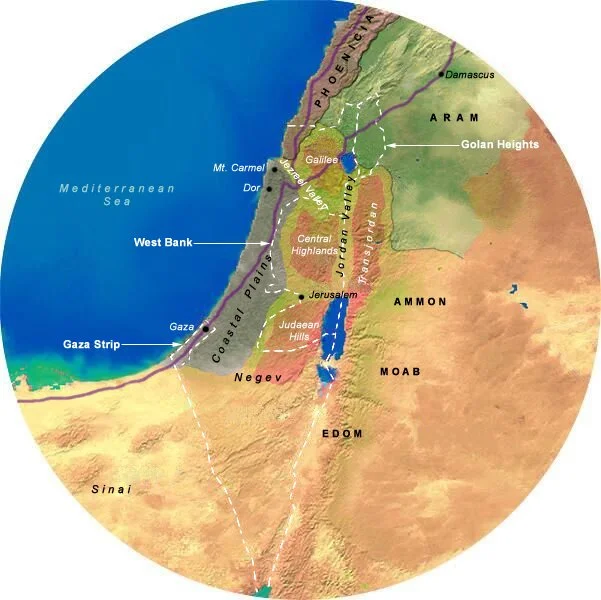
It seems that the people who were later called the Philistines lived in that gray area right on Egypt’s northeast border. The shortest way to the Promised Land would take God’s people right through that territory. Please bring up our second map.
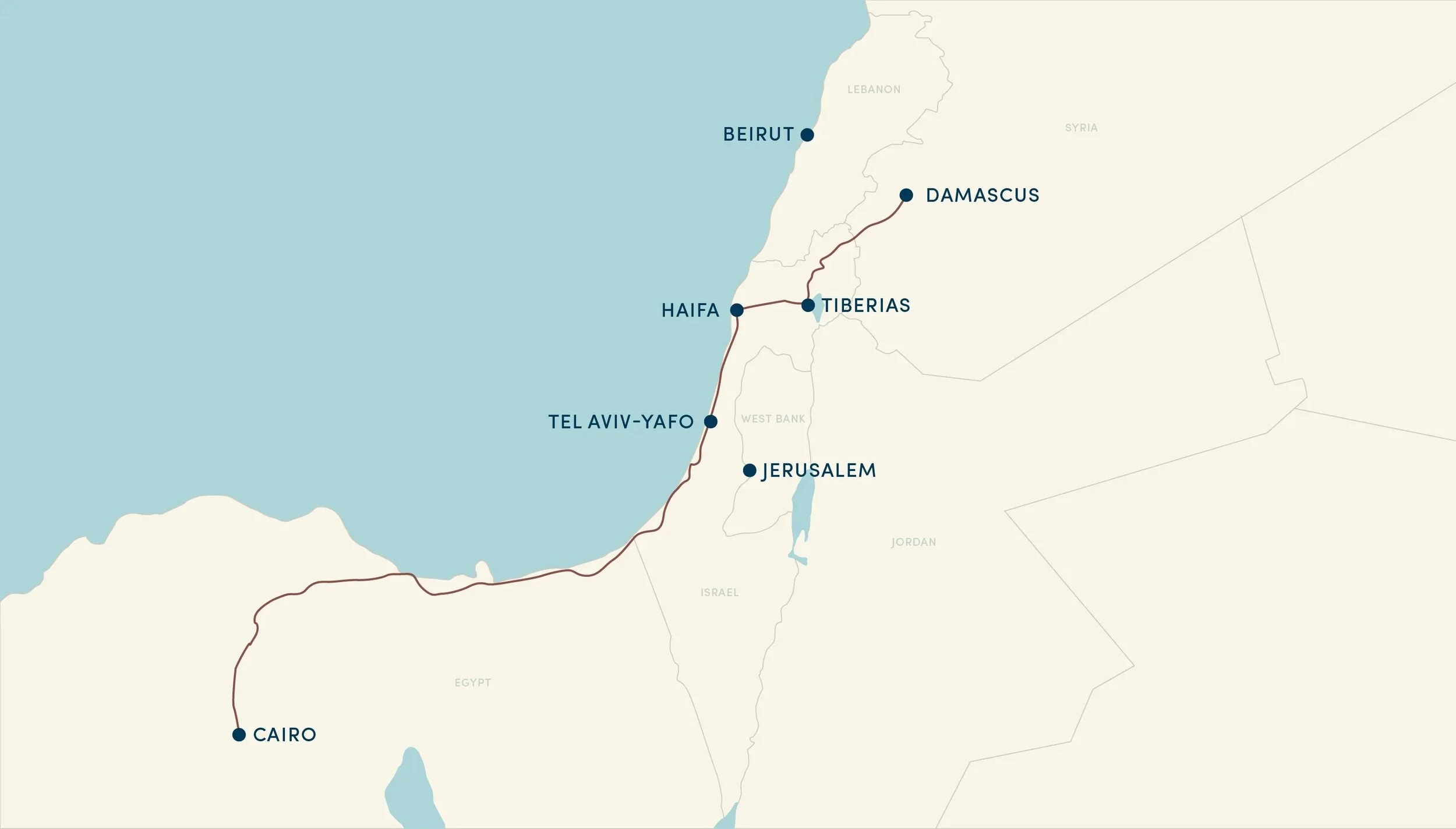
This route was a rather well-worn trade route—like I-80. Some people don’t take I-80 because it takes you through Chicago. The Lord didn’t want to take His people on this route because it would take them through the Philistine country.
Now you might be wondering why the Philistines were such a problem for the Lord. After all, He just decimated the superpower of the day. Yes, but He did so because of what they had done to His people. To this point, the Philistines had done nothing like that. He isn’t going to judge without sufficient reason.
The Lord deals with the realities of this life and they’re messy. The presence of these Philistines is messy. The Lord didn’t make them disappear with the wave of His hand. That’s how it goes in your life too. He rarely waves your difficulties away. He charts the best course forward for you in the midst of your difficulty. He works all things, including that difficulty to your good.
The Lord knew that if the Israelites encountered trouble on this route, they might return to Egypt—“If they face war, they might change their minds and return to Egypt.” Now that might seem a bit strange to us. Why would anyone return to a nation that oppressed them? Well familiarity is a very powerful force. The known—no matter how bad it is—is often preferrable to the unknown. There are also strange bonds formed by abuse and trauma. The human heart is not easy to navigate. Egypt might seem like a relatively safe place because those people just got decimated for oppressing them. They got their hand bit hard and if Israel saw the Philistines Egypt might seem safe in comparison.
The Lord didn’t want them to ever return to Egypt, though, and so He steered them away from the Philistines. When Israel did, in fact, face war with someone else, they did want to return to Egypt. They cried, ‘“Why is the Lord bringing us to this land only to let us fall by the sword? Our wives and children will be taken as plunder. Wouldn’t it be better for us to go back to Egypt?” And they said to each other, “We should choose a leader and go back to Egypt.”’
Throughout the wilderness wanderings, the people often wished they had never started following the Lord. As Calvin put it, “[they] were prepared to throw away by their ingratitude the grace offered to them.” Now this wasn’t included in Scripture to tell us how uniquely ungrateful the Israelites were. It is a caution for all of us. It’s a reminder that our flesh will often find slavery to sin much more comfortable than the freedom of faith. That’s one reason we return so regularly to sin. We’re afraid of the terrifying vulnerability of being free. In our slaveries, there is always someone to blame. Freedom takes that easy blaming away. It’s worth considering your forms of bondage and whether you want to be free. What’s keeping you from leaving lust behind really? What’s actually keeping you from taking the bull by the horns in your family?
The Lord guided the people along the best ways for them; as we see in verse 18, “So God led the people around by the desert road toward the Red Sea. The Israelites went up out of Egypt armed for battle.” That last line is rather confusing. It’s also translated as, “they went up out of Egypt in an orderly fashion,” or, “they went up in groups of fifty,” or, “they went up out of Egypt harnessed by the Lord.” It’s hard to say exactly what’s going on here but the basic point is that they were guided by the Lord. The Lord of the plagues was still in complete control.
We can’t even begin to understand the extent of His control. Look back at verse 17, “If they face war, they might change their minds and return to Egypt.” The Lord not only knows what will happen, He knows what would have happened. He not only knew everything that would happen to you after elementary school, He also knew what would happen to you if your family moved to Saskatchewan after elementary school. You can take great comfort from this because it means the Lord has you exactly where He wants you.
If you could bring up that last map again. The Lord didn’t take them on that path for good reasons. He didn’t want them to run into trouble. He also planned on taking them to Sinai. It was always His plan to bring them to Sinai. He promised Moses; “When you have brought the people out of Egypt, you will worship God on this mountain.” That’s two reasons we know as to why the Lord took His people along that path—safety and promise. There are likely two dozen more that we don’t know about. That’s how life with God works. That’s why you’d be very wise to trust in Him with all your heart and lean not on your own understanding and in all your ways submit to Him and He will make your paths straight. Your understanding doesn’t determine reality. His does.
Now we think about tying up some loose ends on the way out. That’s our second point: living by the promises. Leaving not only casts light forward—thinking about what’s next and what path to take out of Egypt; it also casts light backward. When you leave college, you clean you think about all the people you met and will likely never see again. When you leave a committal at a cemetery, you want to keep looking backward in life to not lose contact with that person.
When leaving, you look forward and backward. It’s an emotional experience. We see that with Joseph’s bones; verse 19, “Moses took the bones of Joseph with him.” We haven’t thought about Joseph for a while but he’s the whole reason the people came down in the first place. The Lord sent Joseph ahead of the rest of his family to ensure they would have food during famine. The Lord had made clear that the people would one day—after 430 years—come back to the Promised Land and Joseph believed that. He wanted to be buried where Abraham, Isaac, and Jacob were buried.
Joseph had many good memories in Egypt but his future was in the Promised Land. His future after death was in the land. This taking of the bones is a sign of hope in the resurrection. These bones will rise. Joseph wanted the first thing he saw when he resurrected to be the Promised Land.
That’s faith. Faith takes the promises of God seriously. That’s long-term planning. We wisely think of long-term planning in terms of retirement or a will. Faith has a much longer view in mind. It believes that God will do what He promised even if we die before seeing it. That’s what Hebrews 11 calls faith, “these people were still living by faith when they died. They did not receive the things promised; they only saw them and welcomed them from a distance, admitting that they were foreigners and strangers on earth.” Do you have that? Yes, there’s other motives rolling around in your heart, but is faith one of them?
Faith is hard for us. We don’t understand how addicted to instant gratification we are. It’s the air we breathe. 5G internet will soon seem as slow as dial up. If you have to wait for more than fifteen minutes at the doctor’s office, you wonder what’s gone wrong with the world. We aren’t trained in waiting. Certain jobs help train us. Agricultural work tends to. Working in investments tends to. Working at the upper levels of management tends to. Much of the patterns of modern life, though, train us in the opposite.
That makes faith counter-cultural in the deepest of ways. It’s been nearly sixty years since Joni Eareckson Tada dove into the Chesapeake Bay, fractures her neck, and became a quadriplegic. It’s one thing not to be able to move for a day. It’s quite another thing to not be able to move for six decades with no hope that you’ll ever walk again, or hug a loved one, or feed yourself again. You’ve got a promise though—God said that you’ll have a new body in the next life. Does that seem like a hopeful situation to you? That, in so many ways, is the life of faith. “They did not receive the things promised; they only saw them and welcomed them from a distance, admitting that they were foreigners and strangers on earth.” That promise keeps Joni going. Her memoir The God I Love is worth your time.
That promise kept Jesus going. His life was just a dear to him as yours is to you or Joni’s is to her. As Jesus hung on the cross, all he had was the promises. There had to be a lot of emotion behind his cry, “Father, into your hands I commit my spirit.” His resurrection is proof that the Father rewards faith in the promises. He rewards Joseph’s sort of faith regarding his bones. Do you have the sort of faith He rewards?
That’s living by the promises. Now we see that this promise making and promise keeping God is with us. That’s our final point: the Lord is with us. Life in Egypt was difficult, but everyone knew what to expect. They expected to bake bricks. They expected to lay bricks. We humans can get used to almost anything if there is predictability. Life since Moses came back has been exceedingly unpredictable. It will remain unpredictable. The life of faith is unpredictable and so is yours if you have faith. Israel is leaving and that will make life unpredictable.
We see that in their travels in verse 20, “After leaving Succoth they camped at Etham on the edge of the desert.” I wish I could give you a map of this, but the location of neither Succoth nor Etham is very clear. That might seem strange but you’re not going to find Williams on a map even though it was in Alamo township or Mentha. Some town become ghost towns and eventually all memory of them is lost.
The precise locations aren’t what’s important here though. What’s important is how the Lord led the people from place on the map to place on the map; verse 21, “By day the Lord went ahead of them in a pillar of cloud to guide them on their way and by night in a pillar of fire to give them light, so that they could travel by day or night.” To me it seems likely that the pillar of cloud and fire are the same. Fire makes smoke. When it’s dark out, you see the fire within.
Fire is one of the pre-eminent signs of God’s presence. You see it at Sinai, when Elijah is taken to heaven. You see it all over the place in the book of Amos which the Men’s Bible study is reading. It’s a wonderful image since fire simultaneously purifies, consumes, and repels. The question is whether you’re being purified, consumed, or repelled by God’s presence.
This pillar of fire is a promise of continued guidance. Put yourself in Moses’ shoes. If the Lord left you high and dry at any point during the plagues, you’d be in huge trouble. If He left you high and dry now, you’d be in huge trouble. This pillar was a visible reminder to Moses and the people that they were not abandoned. The Lord who had started this salvation from slavery would bring it to completion. So it is with you. He who started a good work in you will bring it to completion.
This pillar is also a sign of God’s forethought. He had it all planned out before He even called Moses out the wilderness. It’s not surprising that this burning pillar that doesn’t burn up signifies the presence of the Lord. He first appeared to Moses in a burning bush that didn’t burn up. This same God of Sinai who met Moses when Moses was lost is still guiding him. The Lord is meticulous. He knows what we need before we do. That’s why Jesus said, “Your heavenly Father knows what you need before you ask Him.” it might be worth writing down a few ways your life would be different if you took that more seriously.
The pillar is a sign that the Lord is always with His people; verse 22, “Neither the pillar of cloud by day nor the pillar of fire by night left its place in front of the people.” You might find yourself thinking, “if I had something like that I’d never be afraid again.” Well, the Lord is still just as near to us as He was in that pillar. Please turn in your Bible to Matthew 28—the very end of that gospel. Jesus is God in the flesh—just like us to show that God is with us. Here’s his last word to his disciples before they could no longer see him, “surely I am with you always, to the very end of the age.” Jesus is sending his people out. The Lord is leading His people out. He promises in both instances to be with us always.
That word “always” is more literally “all the days.” That pillar was with Israel guiding them all the days. Jesus is with us “all the days.” What about tomorrow? That’s one of the days. “Surely I am with you all the days.” What about if everything falls apart? “Surely I am with you all the days,” or, “Surely your goodness and love will follow me all the days of my life.” “Neither the pillar of cloud by day nor the pillar of fire by night left its place in front of the people.” The Lord is making clear that He is with His people. He’s guiding His people along the right paths. Would you trust that if you saw that pillar? Then, why not today? Amen.