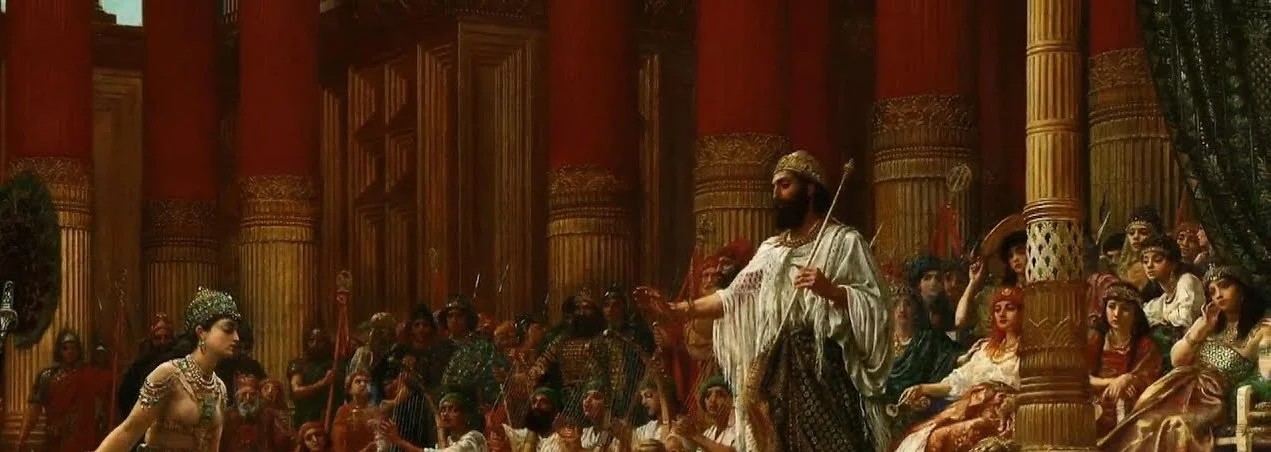
“1 Solomon made an alliance with Pharaoh king of Egypt and married his daughter. He brought her to the City of David until he finished building his palace and the temple of the LORD, and the wall around Jerusalem. 2 The people, however, were still sacrificing at the high places, because a temple had not yet been built for the Name of the Lord. 3 Solomon showed his love for the LORD by walking according to the statutes of his father David, except that he offered sacrifices and burned incense on the high places.
4 The king went to Gibeon to offer sacrifices, for that was the most important high place, and Solomon offered a thousand burnt offerings on that altar. 5 At Gibeon the LORD appeared to Solomon during the night in a dream, and God said, “Ask for whatever you want me to
give you.” 6 Solomon answered, “You have shown great kindness to your servant, my father David, because he was faithful to you and righteous and upright in heart. You have continued this great kindness to him and have given him a son to sit on his throne this very day. 7 “Now, O LORD my God, you have made your servant king in place of my father David. But I am only a little child and do not know how to carry out my duties. 8 Your servant is here among the people you have chosen, a great people, too numerous to count or number. 9 So give your servant a discerning heart to govern your people and to distinguish between right and wrong. For who is able to govern this great people of yours?” 10 The Lord was pleased that Solomon had asked for this. 11 So God said to him, “Since you have asked for this and not for long life or wealth for yourself, nor have asked for the death of your enemies but for discernment in administering justice, 12 I will do what you have asked. I will give you a wise and discerning heart, so that there will never have been anyone like you, nor will there ever be. 13 Moreover, I will give you what you have not asked for—both riches and honor—so that in your lifetime you will have no equal among kings. 14 And if you walk in my ways and obey my statutes and commands as David your father did, I will give you a long life.”
15 Then Solomon awoke—and he realized it had been a dream. He returned to Jerusalem, stood before the ark of the Lord’s covenant and sacrificed burnt offerings and fellowship offerings. Then he gave a feast for all his court.”
“So, who are the good guys?” Children know that we were the good guys in the Revolutionary War. Young people understandably want to know who are the good in the Ukraine/Russia conflict. Part of the reason World War Two is constantly on the History Channel is that adults continue to want clear ethical categories and in that war, one side was blatantly evil—Nazis who wore skulls on their uniforms and tried to murder entire civilizations.
Who are the good guys and who are the bad guys is in many ways a developmental question. Children need these categories. Young adults wrestle with them. Maturity is recognizing that its more complicated than such categories allow. Take yourself for example. Are you the good guy? Are you bad guy? You’re neither and you are, in some ways, both. What about Solomon? What is he?
One of the reasons Scripture includes so many biographies is that God wants us to understand ourselves. We are remarkably mixed creatures and learning to accept us as we are is wisdom in this season of fallen flesh in a fallen world. Even the most foolish isn’t always foolish and even wisest isn’t always wise. Tonight we see that the wisest aren’t wise enough and they are wise to remember that; that’s the claim of this sermon: the wisest aren’t wise enough and are wise to remember that.
We will study this in two points. First: making alliances. Second: seeking wisdom. First, in verses 1-3, making alliances. Second, in verses 4-15, seeking wisdom.
We continue to see the complexity of Solomon in our first point: making alliances. In our last study we saw Solomon clean house and that passage ended with the words, “The kingdom was now firmly established in Solomon’s hands.” What we have now at the outset of chapter 3 is an overview of what Solomon does with this kingdom firmly in his control; verse 1, “Solomon made an alliance with Pharaoh king of Egypt and married his daughter.”
That’s an overview describing years of political strategy. This alliance is in line with the politically savvy we’ve seen from Solomon. Egypt wanting them as an ally is a sign of Israel’s growing strength. God’s people have moved from being Egypt’s slaves toward being Egypt’s equal. Being welcomed to the adult’s table of nations, so to speak, must have been a morale boost, but it came with a cost. Egypt was a very different sort of society. It was a commercial empire won and kept by the sword and sustained and motivated by fleshly mysticism. Egypt’s system was bit like the military-industrial complex Eisenhower warned of but with a healthy dose of magical thinking thrown in. It was markedly different from the structure and culture of Israel and far removed from what the law of Moses detailed for their way of life. Which culture—Egypt or Israel’s—do you think is going to impact the other more? You can hear Paul whisper, ‘Do not be misled: “Bad company corrupts good character.”’
God’s people ought to have sensed that; “Solomon made an alliance with Pharaoh king of Egypt and married his daughter,” ought to have tripped their triggers. Egypt is a symbol for spiritual threat. “All Pharaohs are the same in Israelite imagination, and they are all a threat to Israel,” as one commentator explains. If Solomon was setting the trajectory for the nation by way of a compass, they would now be heading toward the E—due Egypt. Solomon thinks he’s been invited because he’s on par with the world, the same world we saw when we studied the Exodus. It’s the same pattern and it will always find a way to destroy you—be it by enslaving or by corruption. That’s the world of which Jesus spoke saying, “If the world hates you, keep in mind that it hated me first.”
This corruption by the world happens over long period of time as you see with the time frame of the rest of verse 1, “He brought her to the City of David until he finished building his palace and the temple of the Lord, and the wall around Jerusalem.” This sentence is an overview of what we will study for the next few weeks—Solomon’s civic works projects. The Egyptification of Solomon, to make up a phrase, would take time just like the Canaanization of God’s people upon moving into the Promised Land took time. The Americanization or enculturation of the church in any land takes time. The reminder here is not to start the process. Beware of the world.
You see that the Canaanization of God’s people was already among them in the next verse; “The people, however, were still sacrificing at the high places, because a temple had not yet been built for the Name of the Lord.” The entire chapter of Deuteronomy 12 made clear that God’s people were not to use high places. They were to worship at one central location which would preserve the integrity of the faith. If you could please bring up our slide.
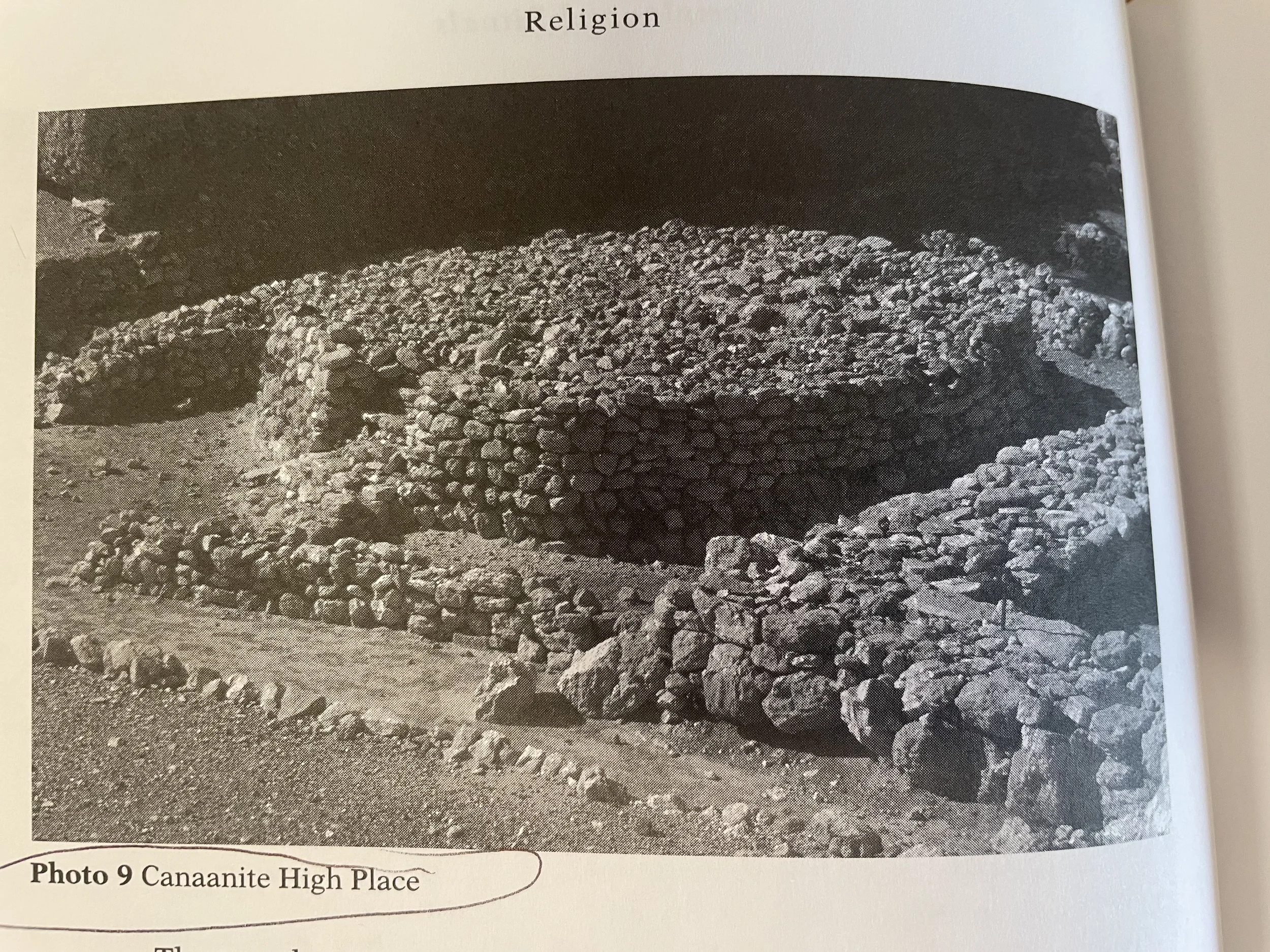
This is what a high place looked like. It was something of a city square for religion. Here the people would worship their local deity—their town mascot and god. The Israelites borrowed that practice but directed it toward the Lord. These high places will become a perennial problem for God’s people throughout the Old Testament and a source of much spiritual confusion. The Lord is noticeably direct regarding the boundaries of pure worship; that’s the thrust of the first four of the Ten Commandments. Relating rightly to God matters more than anyone thinks; absolute truth matters more than anyone thinks.
The inclusion of both these high places and Solomon’s marriage to Pharoah’s daughter is a sign of trouble to come; “there were issues at the very outset of Solomon’s career that would eventually sink him,” as Oswalt explains. Foreign worship and foreign wives are listed here together to forecast trouble to come.
Solomon’s alliances—marriage, political, and worship—will prove his undoing. Divided loyalties undo anyone who makes them. “Purity of heart is to will one thing,” as Kierkegaard put it. Jesus summarizes that one thing as, “love the Lord your God with all your heart, all your soul, and all your might.” There is a reason that the first commandment is first, “you shall have no other gods before me.”
We need to be told this because we tend to think that we can navigate divided loyalties. We act as if we can do the splits with one foot in the world and one foot in the faith. If Solomon couldn’t, I can’t. He’s far wiser than any of us and divided loyalties sunk him. Don’t get sunk.
With all that in mind, we come to verse 3, “Solomon showed his love for the Lord by walking according to the statutes of his father David, except that he offered sacrifices and burned incense on the high places.” Everything we just said about divided loyalties is true and it is true that Solomon loved the Lord at this point by following commandments. He was a mixture—not all wise, not all foolish. We need to learn to see that in Solomon because otherwise we won’t see it in ourselves. Beware of judging Solomon not because he did everything right but because judgment of him puts us under the same judgment. That’s Jesus, “For in the same way you judge others, you will be judged, and with the measure you use, it will be measured to you.” If we dismiss Solomon for not being all wise, we must dismiss ourselves or, more likely, try to find someone way to pretend our foolishness is somehow wisdom. Don’t do that. Accept what the Bible says about people. Accept that you are in that group—fallen but savable but only grace.
Recognize that even the wisest, like Solomon, have lapses. That’s not excuse for his sin or ours but it is a helpful explanation that is part of wisely understanding what it means to be human. Don’t fault your children or your parents for not being all wise. Be kind to yourself in that regard as well. That’s part of wisdom too; we see Solomon’s wisdom in our second point: seeking wisdom.
We just saw that Solomon was not wise enough; now we see the same but from a different angle. In our last point, he didn’t realize he was not wise enough. In this point, he does realize that he’s not wise enough. It so often depends on how we frame our dilemma.
Solomon recognizing his need for wisdom begins with him going “to Gibeon to offer sacrifices, for that was the most important high place, and Solomon offered a thousand burnt offerings on that altar.” The king went for political reasons. Gibeon was part of a swing-tribe and Solomon was building unity. He also went for religious reasons. He wanted to honor the Lord and so offered a thousand burnt offerings. The Lord doesn’t like the high places but you see His condescension and desire to help Solomon in giving him this dream while there; “At Gibeon the Lord appeared to Solomon during the night in a dream…”
Dreams were different in that culture than they are in ours. We view dreams as our minds processing the events of our lives or as strange vacations of the imagination. The ancients may have viewed them that way as well but they considered certain dreams to be messages from the gods. The Lord did, at times, speak through dreams; that’s part of Hebrews 1:1’s, “In the past God spoke to our ancestors through the prophets at many times and in various ways…” The Lord was pleased with many of Solomon’s intentions and wanted to direct him more rightly and hence this dream with the amazing offer, “Ask for whatever you want me to give you.” That’s a once in a lifetime or for most a never in a lifetime proposal.
As always, our responses reveal us. That’s the message of all those stories about people finding genies in lamps. Their wishes reveal them to be motived by power, popularity, selfishness, or selflessness. What motivates Solomon? “O Lord my God, you have made Your servant king in place of my father David. But I am only a little child and do not know how to carry out my duties.” The last few studies showed us that Solomon had a very good idea of how to carry out so many of his duties. Our last point shows us that he also in so many ways didn’t. He realizes his shortcomings. By saying he is “only a little child” he’s not referring to his age. He’s referring to how very inadequate he feels regarding the task before him. That’s humility. That’s wisdom. That’s the opposite of the sort of pride and foolishness we saw with Adonijah. That’s the opposite of the sort of rule you see in Egypt.
Solomon is wise enough to as for wisdom; verse 8, “Your servant is here among the people you have chosen, a great people, too numerous to count or number. So give your servant a discerning heart to govern your people and to distinguish between right and wrong.” By referring to the people as too numerous to count, Solomon is acknowledging that God has kept His promise to Abraham. By referring to himself as king in place of his father David, Solomon is acknowledging that God has kept His promise to David. Solomon realizes that he is being called to govern something he didn’t start. He recognizes that He is a vassal king—the Lord is the true sovereign and Solomon wants to make things go God’s way.
That’s what you want in a leader. You want a husband who wants things to go God’s way. You want a parent who wants things to go God’s way. You want church leaders who want things to go God’s way. That’s what Israel was to want in a king. That’s what we have in our king. Jesus is the perfection of leadership in this. He always wants things to go God’s way because he is God. He is wiser than Solomon even at his wisest. At his wisest, Solomon knew he needed more wisdom. Jesus has all wisdom. What’s remarkable about that is that all wisdom doesn’t make you proud; it keeps you humble. It’s not wisdom that shipwrecks Solomon. It will be his ignoring wisdom. Here, though, you see great wisdom in Solomon and as we’re seeing in this book and James, wisdom and humility always walk hand in hand; hence Solomon’s humility at the end of his request, “For who is able to govern this great people of Yours?” Adonijah would have said, “I’m able,” and so thankfully he doesn’t get the crown. Don’t assume you are able. Trust that Jesus is.
Solomon wanted to lead God’s people in God’s way and so asked for wisdom to govern well. “The Lord was pleased that Solomon had asked for this,” as verse 10 puts it. The Lord shows His pleasure in giving Solomon not only the wisdom we will see in the next few weeks but also everything that other kings would have naturally requested—a long reign, wealth, and power. Solomon sought first the kingdom of God and all thopse things were added unto him. In that sense, what Solomon experienced with this once in a lifetime offer is available for everyone if only we, like Solomon, want what God wants to give. That’s Jesus in seek ye first the kingdom of God and all these things will be added unto you.
Now we need to be careful here because otherwise we will try to scam God. We will try to use Him. That never works until we, like Solomon, want what we want for God. Solomon wanted wisdom to fulfill what God required. He wanted from God to give to God. That’s the only way great power, wealth, or life can be wholesome for us rather than destructive. When Solomon starts to miss that, these same gifts become destructive.
Solomon does receive these remarkable gifts; as the Lord says, “I will give you what you have not asked for—both riches and honor—so that in your lifetime you will have no equal among kings.” That’s not exaggeration. As Oswalt explains, Solomon’s “reign came at the end of the Late Bronze Age and the beginning of the Iron Age, when there were no other great powers to compete with him.” Solomon’s kingdom was situated at the crossroads of the Ancient Near East which made for quite a lucrative positioning. Solomon reaped those benefits and the goods and the dangers that came with that.
There was a calling with this blessing as there always is; “if you walk in my ways and obey my statutes and commands as David your father did, I will give you a long life.” Such obedience would in no way meant to pay God back for His grace. Rather, the commandments were to keep Solomon on the straight and narrow of God’s grace and so it is with us.
We see Solomon’s response to this in verse 15, “Then Solomon awoke—and he realized it had been a dream. He returned to Jerusalem, stood before the ark of the Lord’s covenant and sacrificed burnt offerings and fellowship offerings. Then he gave a feast for all his court.” Solomon realized it was a dream from the Lord and he responded as we are to respond to this grace with gratitude. He thanked God in worship. That’s the humility and wisdom of gratitude and the reason that a holiday like Thanksgiving does more for our culture’s sense of virtue than we might assume. The humility and wisdom of gratitude helps keep us on the straight and narrow rather than falling off into the excesses that come with great gifts.
Notice where Solomon offers this gratitude—not at the high place in Gibeon but in Jerusalem, where the people were to worship, where he would now begin to build the temple. The wisdom is already starting. He’s not worshipping at a high place. He’s worshipping in the designated place.
The ending of this chapter is encouraging as the beginning of it was discouraging—from Egypt to Jerusalem, from high places to properly prescribed gratitude. This isn’t all of Solomon’s life, but it is part of it. We do a disservice to truth if we stop the story tonight but we do a disservice to Solomon if we act as if this encouraging ending to this chapter doesn’t matter.
We would be wise to remember that in our own lives. We would be wise to remember that neither are we all wise and that we would be wise to keep asking for wisdom to fulfill our callings from God for God. Amen.